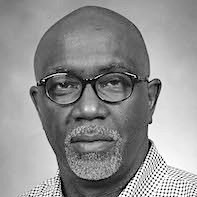
Dwight Cammeron (President) is an experienced independent documentary filmmaker whose projects have been recognized by the National Academy of Television Arts and Sciences, PBS’s National Black Programming Consortium, The National Educational Telecommunications Association, and the Broadcast Education Association. His films, which highlight African American history and center on the African American experience, have been screened at film festivals and conferences nationwide. Cammeron’s films are shown regularly on Alabama Public Television. He was awarded an Emmy for The Music of Dorothy Love Coates and the Original Gospel Harmonettes. The documentary tells the story of one of America’s most original and influential voices during the golden age of gospel. Cammeron is a native of Gadsden, Alabama, a small north Alabama town in southern Appalachia. He earned a bachelor’s degree in Film Communication from the University of Alabama at Birmingham. He also holds a master’s in Telecommunication and Film (Journalism and Creative Media) from the University of Alabama in Tuscaloosa. As a senior lecturer, Cammeron taught documentary and digital media production classes in the Department of Journalism and Creative Media at the University of Alabama.

Malcolm Cammeron (Vice President) is a scholar specializing in nineteenth and twentieth-century U.S. history. His work focuses on African American, environmental, labor, and urban history in the U.S. South. His book project, The Bulldozer and the Movement: The Southern Freedom Struggle in the Age of Urban Renewal, explores how post-World War II urban development and changes to the built environment influenced protest movements in the urban South. Cammeron’s film, Saving Grace: Preserving Black History in Southern Appalachia, was an official selection at several film festivals, including the Columbus Black International Film Festival, Montreal International Black Film Festival, George Lindsey UNA Film Festival, Gary International Black Film Festival, Seattle Black Film Festival, Black Warrior Film Festival, and the Deltas of Charlotte Foundation Legacy of Black Women Film Showcases. His research has been supported by the Carter G. Woodson Institute for African American and African Studies at the University of Virginia and the Center for Civil Rights History and Research at the University of South Carolina. Cammeron earned an M.A. and Ph.D. in History from the University of Virginia, as well as an M.A. in History and a B.A. in Marketing from the University of Alabama. Cammeron is a native of Northport, Alabama.

Ginger Jolly (Secretary) is an Assistant Professor in the Journalism and Creative Media Department at the University of Alabama. Her interests include racial and economic disparities. Her stories explore issues that emerge from these disparities along with the otherness and isolation persons in marginalized groups experience. Her documentary films have aired on Alabama Public Television and screened in the Sidewalk Film Festival in Birmingham, the Toronto Black Film Festival, the International Black Film Festival in Nashville, the Jubilee Film Festival in Selma, the Mid-Atlantic Black Film Festival in Norfolk, the Cinedelphia Film Festival, and at Temple University, among others. Jolly is a native of Russellville, Alabama.

Cathy McElderry, PhD, MPH, LCSW, is a professor and the former chair (2018-2024) of the Department of Social Work at Middle Tennessee State University. Dr. McElderry earned her PhD in social work from the University of Alabama, her MSW from Clark Atlanta University, and her MPH from the University of Alabama in Birmingham. Dr. McElderry’s research focuses on social determinants of health and well-being; she has a particular interest in advancing an understanding of the role of social and economic disparities in initiating, shaping, and contributing to problematic outcomes such as poor health, exclusionary discipline, and the school-to-prison pipeline. Other areas of research and scholarship include reparations for African American descendants of chattel slavery and the promotion of passage of H.R.40, a bill to study reparations. She has over 20 years of experience in higher education and clinical experience in health and mental health settings.
 MILLER HEIGHTS PRODUCTIONS | Dwight Cammeron | Documentary Filmmaker